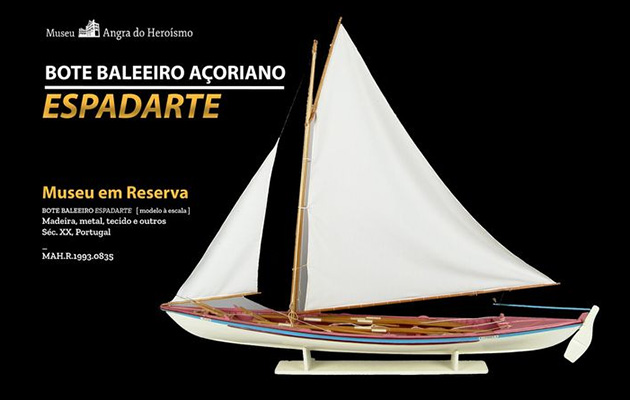
The whaleboat is a type of small vessel with mixed propulsion, using both oars and sails. It is very fast, light, and manoeuvrable, and was used for whaling from mother ships, as done by whalers in New England, or, as occurred in the Azores until 1986, from coastal stations. Designed and created based on the North American model, the first Azorean whaleboat was built in Lajes do Pico by Master Francisco José Machado, known as “the Experienced”, in the late 19th century. The result of the creativity and inventive genius of the island’s first great shipbuilders, and considered by many experts as “the most perfect vessel ever to sail the seas”, it is a combination of elegance, robustness, efficiency, and uniqueness. As fast and manoeuvrable craft, whaleboats were built from light woods and had a slender profile to achieve good hydrodynamic performance. Typically, they carried 6 to 8 rowers and were steered using a steering oar, controlled by the master at the stern. The “trancador”, or harpooner, positioned at the bow, threw a long iron harpoon, fitted with a line, attached to a rope made from heavy wood. In recent years, many whaleboats in the Azores have been restored, and others newly constructed. They are now used for sporting and recreational purposes, including sailing and rowing excursions and competitions. This model belongs to the Nautical and Aeronautical Collection of the Museum of Angra do Heroísmo.