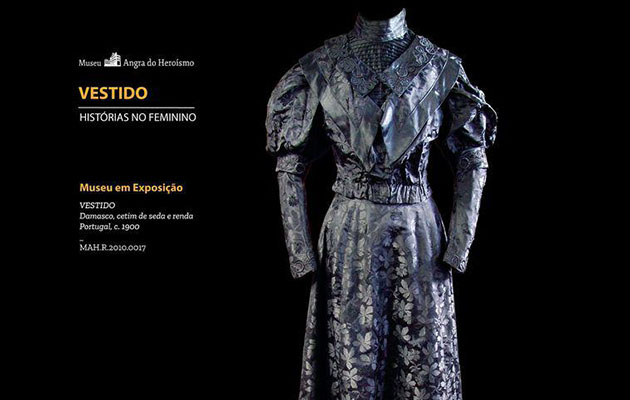
For a long time, a wedding dress could be any dress of any color, new if the bride had some means, but not intended to be worn solely on the wedding day.
The dress highlighted here was worn by Leonisa Rosado de Sousa Roxo (1878–1932) on the occasion of her marriage on July 4, 1900. It was donated to the Museu de Angra do Heroísmo by a family member and is part of the exhibition “Do Mar e da Terra… uma história no Atlântico.”
The choice of black, which may seem unusual today, was long common, as the color was considered both elegant and austere, and also highly versatile. A black silk dress was what we would now call a wardrobe essential, often a woman’s finest dress, capable of serving multiple functions, from mourning to formal occasions.
It was only in the mid-19th century that Queen Victoria popularized white as the ideal color for brides, wearing a stunning white satin dress overlaid with Honiton lace and a veil of the same bobbin lace, as a strategy to revitalize that sector of the English textile industry. In 1854, Pope Pius IX established the paradigm that fashion had been imposing, associating the bride’s white attire with the cult of the Immaculate Conception and the Virgin Mary.
Text | Ana Almeida / Maria Assunção Melo