Bloodletting was considered more than a practice; it was regarded as an art, whose merit could be appreciated by anyone able to witness its healing effects on others or themselves.
Since Hippocrates – who recommended its application to the breasts of all women suffering from excessive menstrual flow – the Western world had practised bloodletting using cupping glasses. By the end of the 19th century, a wide range of ailments were claimed to be alleviated or cured: asthma, angina, apoplexy, catarrh, colic, contusions, delirium, migraines, gout, lethargy, lumbago, rheumatism, measles, deafness, cough, among many others.
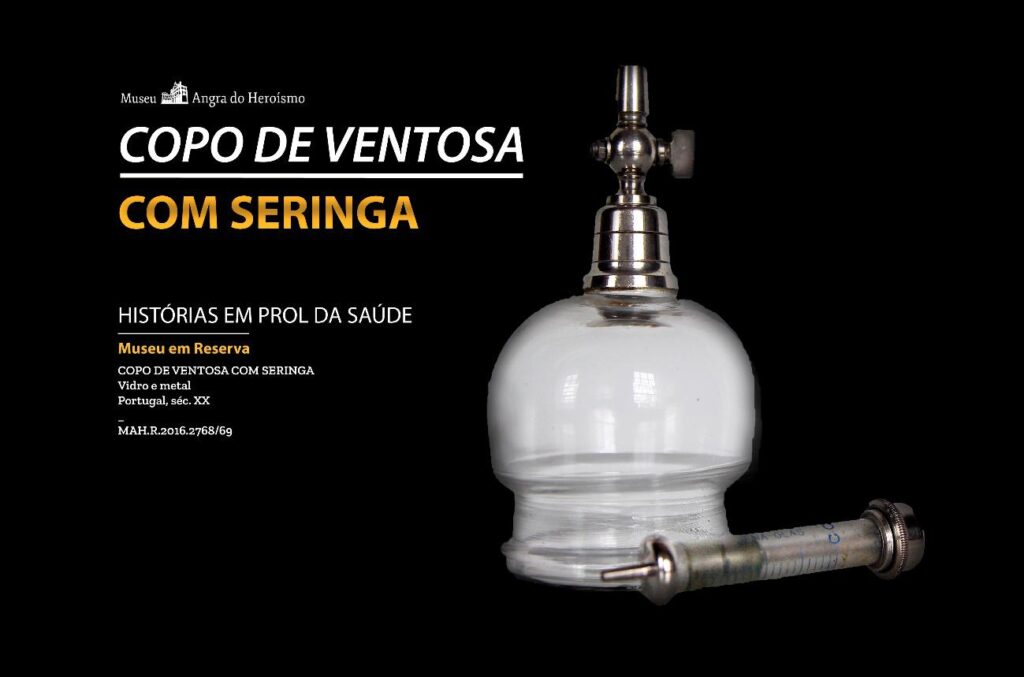
Temples, nape, behind the ears, throat, neck, hands, feet, chin, chest, abdomen, back, hips, thighs, perineum, and sacrum were areas of the body treated with cupping glasses. These, usually made of glass, had thick rims to minimise discomfort or pain upon removal, and varied in height from 4.5 to 7.5 centimetres.
For the patient’s comfort, they remained lying down while cutting instruments, such as lancets or scarificators, incised the skin. As the blood flowed, the glass “leech” (another name for the cupping glass) was applied with a wick inside to create a vacuum and allow adhesion. The complexity of this procedure – requiring experience, delicacy, and balance – was facilitated by the introduction of a hole with a tap, which allowed suction through attachment to a syringe.
This object, a testimony to a practice that persisted until the 1930s, is part of the Science and Technology Collection of the Museum of Angra do Heroismo.