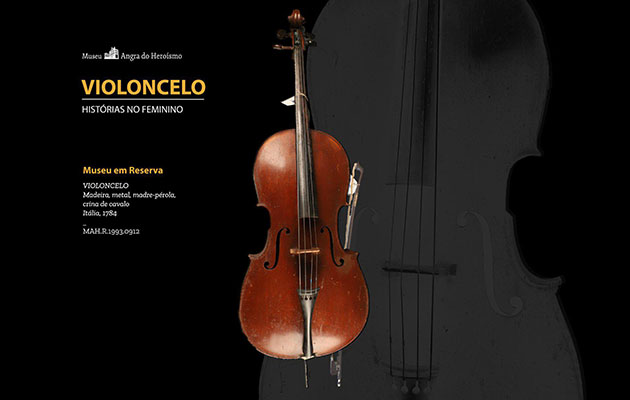
The cello, a string instrument believed to have emerged in the 16th century, was for many centuries considered unsuitable for women. Playing it required considerable physical effort. Its deep tone was not associated with feminine grace, and its volume meant that the performer had to contort her torso in a manner deemed ungraceful while handling the bow. Decorum also dictated that the few women who played it had to do so uncomfortably, adopting a position different from men, known as the “side-saddle,” in which both legs faced to the left, with the right leg resting on a small bench or cushion, or crossed over the left leg.
The Portuguese Guilhermina Suggia (1885–1950), nicknamed “Paganina” in recognition of her virtuosity, is considered the first woman to pursue a career as a solo cellist. She adopted the male playing position, gaining fame for her electrifying interpretations that combined technique and musical sensitivity. Still regarded today as one of the finest performers of all time, her international recognition decisively helped to dispel the stigma associated with women playing the cello.
The cello highlighted here, part of the Musical Instruments Collection of the Museu de Angra do Heroísmo, was, according to a label inside its soundbox, made in 1784 in Cremona, Italy, in the style of Stradivarius, the renowned 18th-century Italian string instrument maker.
Text | Carla Ferreira / Ana Almeida