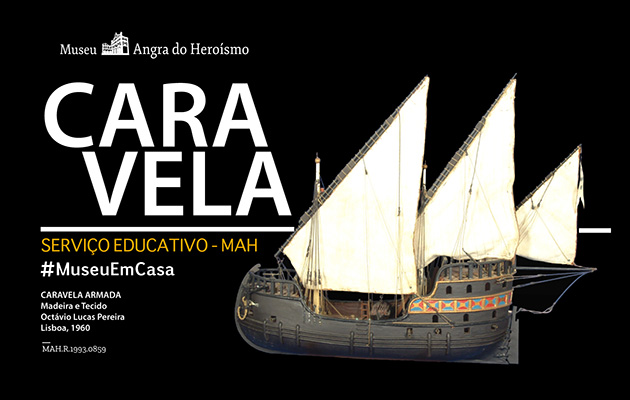
The caravela is the iconic ship of the Portuguese Discoveries, used mainly for the exploration of the African coast between Cape Bojador and the Cape of Storms, as the prevailing currents and contrary winds required vessels capable of tacking—that is, sailing against the wind.
Caravelas ranged from 20 to 30 metres in length and 6 to 8 metres in beam, with a capacity of approximately 50 to 80 tons. They could have two or three masts, decreasing in size from bow to stern, equipped with lateen (triangular) sails, allowing them to sail in a zigzag against the wind. The narrow, deep hull provided great stability, while watertightness was ensured by caulking the planks with oakum, which were then coated with resin and tar by the shipwrights.
The single deck, under which provisions were stored, and the raised stern—the castle, housing the captain’s and clerk’s quarters—gave the vessel a very distinctive silhouette. At the bow, the pilot navigated, equipped with a compass, an astrolabe, and a quadrant. He directed the helmsmen according to his instructions and those of the captain. It was also customary to paint two eyes on the bow, as they were believed to “see” the way—a tradition that continues on some fishing boats to this day.
Smaller caravelas carried between 25 and 30 men, while the larger ones could transport over 100. The crew was usually composed of young, inexperienced sailors, and captains could be no older than twenty. From the reign of D. João II onwards, caravels were armed with cannons on the deck instead of small-calibre guns (falconets, half-culverins, or serpentine guns) which had previously been mounted on the bulwarks.
From the late 15th and early 16th centuries, the round caravel was developed, featuring four masts and square sails on the foremast, capable of carrying up to 150 tons. This vessel is considered a Portuguese invention, resulting from improvements proposed by Bartolomeu Dias after his return from the Cape of Good Hope, in response to the winds encountered. In addition to better wind utilisation, the round caravel allowed more space for armament and provided shelter for a larger number of crew members.