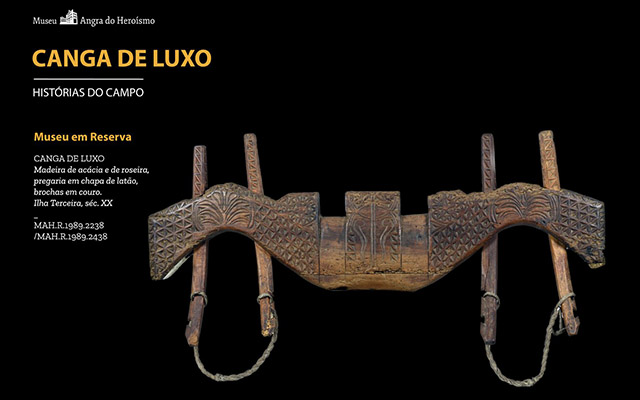
On Terceira Island, ox yokes such as this one, forming part of the Ethnography collection of the Museum of Angra do Heroísmo, were reserved for festive occasions, assuming a role of social representation, in this case reflecting the status of the farmer and landowner, usually reinforced by the engraving of a name and a date.
The Terceira ethnographer Luís da Silva Ribeiro considers these luxury yokes, profusely decorated with geometric and symbolic motifs carved with a knife or chisel and with brass studs, to be among the highest expressions of the “artistic work” of the people of Terceira, linking them to symbols evoking magical-religious powers.