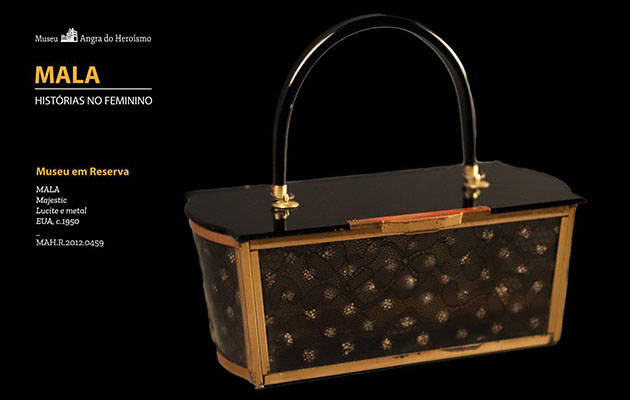
At the end of the 1940s, the obsession with durability led fashion designers to use modern materials, many derived from wartime technologies, to create fashion accessories. One such material was lucite, a hard but very shiny and lightweight plastic developed in 1931 by the American company DuPont.
The rigid and translucent nature of lucite gave handbags an almost sculptural dimension, enhanced by extravagant geometric shapes, elegantly designed circular handles for carrying on the arm, and finely crafted clasps that were both functional and decorative.
Although they had limited capacity, lucite handbags are considered among the most glamorous and creative ever, especially popular with actresses, chorus girls, and society ladies vacationing in Miami Beach in the 1950s, who made a point of displaying increasingly daring designs, many produced in Florida, such as the featured model manufactured by Majestic.
The luxury status of lucite handbags, handcrafted and welded and designed by renowned designers such as Wilardy, ended in the late 1950s when mass-produced plastic versions began to appear through injection molding.
The handbag highlighted here is part of the Textiles Collection of the Museu de Angra do Heroísmo, following a donation. It arrived on Terceira Island around 1970 in an “American barrel,” and was considered too extravagant to take outside, being used solely as a jewelry case.
Text | Ana Almeida