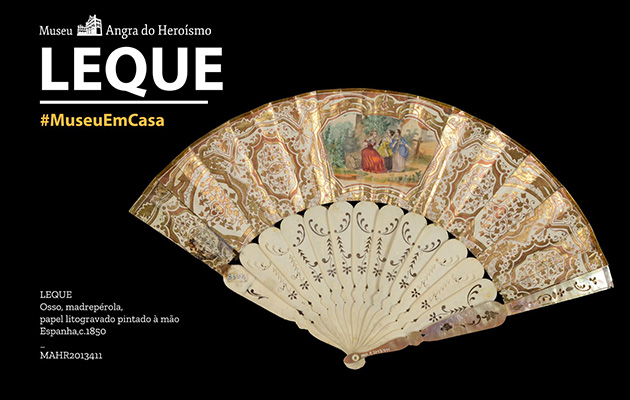
Leque is the abbreviated form of the Portuguese expression abano léquio, the latter term referring to the Ryukyu Islands south of Japan. The Latin term flabellum refers to fans used in classical antiquity and by Western civilisations, from which the collector of fans is called a flabellista and the historian a flabelliógrafo. The fan, as we know it today, is a utilitarian instrument for creating airflow and an accessory, originating in the Far East, more precisely in China in the 7th century, and later in Japan, where martial artists also used it as a weapon. The earliest fans, generally large and operated by slaves, have been found in civilisations such as Ancient Egypt and Assyria over 3,000 years ago and served not only to create airflow but also to repel insects and protect from the sun, which is why the term flabellum continues to describe similar ceremonial objects used in Christian rituals. In Greek mythology, the fan is also associated with Zephyrus, the entity responsible for the west wind, whose wing was plucked by Cupid so that he could fan his beloved Psyche. Brought from Japan by the Portuguese in the mid-16th century, fans were introduced by Catherine de’ Medici at the French court, becoming a symbol of power, luxury, elegance, and eroticism. Their use spread throughout Europe, reaching their height during the reign of Louis XIV. The fan remains a personal object full of symbolism. In Eastern cultures, it is given on special occasions and represents friendship, respect, and goodwill.