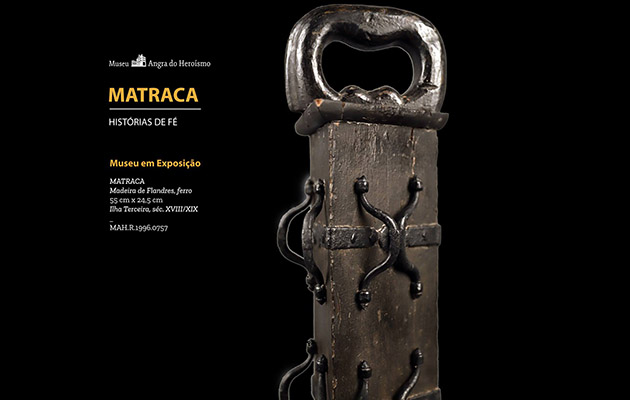
Although verbal language perpetuates the reference to the repetitive and unpleasant sound of this instrument through unflattering expressions such as “fechar a matraca” (shut the rattler) or “falar como uma matraca” (talk like a rattler), few people today know exactly what it looks like or how it functions.
The history of the matraca is linked to a Catholic Church prohibition, in force since the 7th century, forbidding the ringing of bells between Maundy Thursday and Easter Sunday. It was therefore the sacristan’s duty to call the faithful to the Way of the Cross, confessions, penances, and sermons by rattling through the streets. During Holy Week processions and reenactments, it produced a frightening sound, evoking the chaos of the world following Christ’s death. In services and liturgies, the ringing of small bells during the Eucharist was also replaced by a matraca.
This wooden matraca, shaped as a triangular prism and part of the Collection of the Museu de Angra do Heroísmo, has eighteen iron clappers attached at the corners of each side. When the instrument is spun while holding it by the top handle, the clappers strike iron plates fixed to the sides, producing the characteristic deafening noise of this instrument.
Text: Ana Almeida