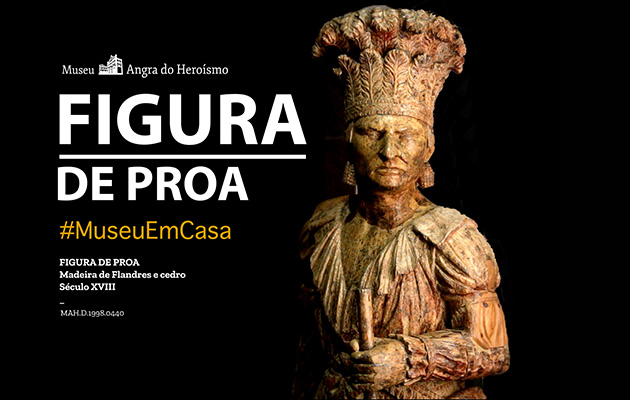
This full-figure sculpture, representing a Native American serving as a messenger in transit, is an old figurehead from a vessel of unknown provenance. Known in Portugal as marombas and in Brazil as carrancas, figureheads featured a wide variety of motifs, helping an often illiterate population to identify the ship. They also displayed the wealth of the shipowner and were frequently attributed protective functions. Their use became common from the 16th century onwards, with some reaching enormous sizes and weighing several tonnes, which hindered navigability; over time, they became progressively smaller and eventually disappeared during the 19th century.
In the case of this particular maromba, it is only known that it was adapted and transformed into a statue, having stood for many years above the entrance gate of a residence on Caminho de Baixo de São Carlos, in Angra do Heroismo, as shown in a photograph dated from the 1920s–30s. Property of the heirs of the Tomé de Castro family, it was deposited at the Museum of Angra do Heroismo in 1989 and underwent restoration work in 2010–11, after which it became part of the exhibition From Sea and Land… a History in the Atlantic.