The promotion of sea bathing for therapeutic purposes from the mid-19th century led to a change in leisure behaviour, making visits to the seaside important social occasions by the end of the century.
A fundamental element for this new behaviour, the swimsuit symbolises the liberation of the body, athleticism, and the youthful spirit quickly adopted by younger generations.
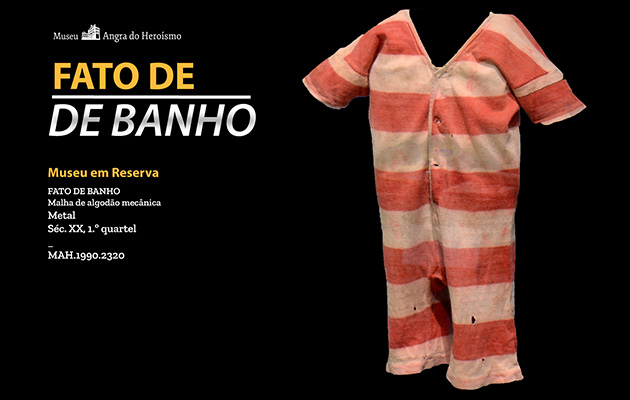
The male version, with short sleeves, legs, and front buttons extending to the neckline, often featured a striped pattern, which, in the symbolism attributed to colours and patterns over time, is generally associated with transgression and nonconformity.
As miniature versions of adult attire, children wore the same clothing as adults, a concept aptly illustrated by this child’s swimsuit, part of the Textiles Collection of the Museum of Angra do Heroismo.