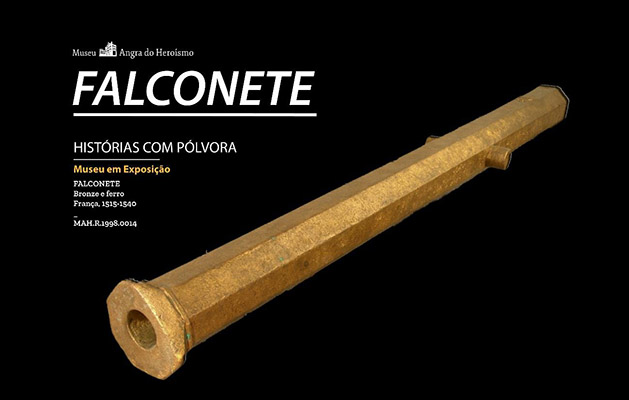
This distinctive firearm, with an octagonal exterior and no reinforcements, is characteristic of French construction techniques from the first three decades of the 16th century. On the upper surface of the barrel it bears a salamander, the mythical animal believed to be fire-resistant, inhabiting both land and water, adopted by Francis I of France, who had it depicted extensively in his residences such as the Château of Fontainebleau and Chambord, here shown surmounted by the royal crown.
Francis I epitomises the French Renaissance, taking a leading role in the letters and arts of the 16th century, and notably patronising Leonardo da Vinci in the final years of his life, which led to the presence of the Mona Lisa (La Joconde) in France.
At the same time, he was the monarch behind French expansion into the New World and the ongoing wars against the Habsburgs. Nevertheless, when widowed, he married D. Eleanor of Austria, widow of D. Manuel I of Portugal and sister of Charles V (Habsburg).
Gaspar Frutuoso, who referred to it as a “sacre”, located it at the Fort of Santo António on Monte Brasil, based on the artillery commissioned by the Castilian admiral D. Álvaro Bazán in 1583. This information is consistent with its recovery from the seabed of Angra do Heroismo Bay in 1996. It fired lead shot weighing around 2 kg, with a maximum range of 1,300 metres.
This object, on display in the exhibition From Sea and Land… a History in the Atlantic, is part of the Militaria and Weaponry Collection of the Museum of Angra do Heroismo.